Text Analysis
Stop Guessing, Start Knowing: How to Actually Analyze Your Text Conversations
SLAP TeamFeb 26, 20266 min read
We've all been there. You're reading a conversation for the fifth time, rotating your phone slightly as if a new angle will reveal new meaning. You screenshot it and send it to a friend, but they're biased too - they want you to be happy, so they'll probably say what you want to hear. You try to think about it "objectively" but you can't, because you care too much.
Here's the thing: analyzing your own text conversations is genuinely difficult, and it's not because you're bad at it. It's because you're human. The moment feelings are involved, perception shifts. But there's a better way to do this - and it starts with knowing what to actually look for.
Why We're Bad at Reading Our Own Conversations
When you're emotionally invested in someone, a few things happen automatically in your brain:
Confirmation bias kicks in hard. You notice the messages that support what you want to believe and explain away the ones that don't. "He took two days to reply, but his message was so warm when he did!" Both things are true. You're just choosing which one to weight.
We misread tone constantly. Text lacks facial expression, voice inflection, and body language - all of which carry the majority of emotional communication. We fill those gaps with our own emotional state. If you're hopeful, you read warmth into neutral messages. If you're anxious, you read distance into fine ones.
We focus on moments instead of patterns. That one amazing message stands out in your memory, but what's the actual overall shape of this conversation? You need to zoom out to see it.
This is why having an outside perspective - whether it's a really honest friend or an AI tool - matters so much.
What to Actually Look at When Analyzing a Conversation
If you want to analyze a text conversation on your own, here's a structured approach that actually works:
1. Look at the big picture first
Before you read individual messages, look at the conversation volume over time. Is it increasing, holding steady, or declining? The arc matters. A conversation that was active for two months and then slowly tapered off tells a different story than one that's been consistently steady.
2. Count who initiates
Scroll through and actually count - roughly - how often you're the one who opens a new conversation thread vs. them. This is one of the clearest behavioral signals of interest. Consistent effort to reach out means someone is thinking about you and acting on it.
3. Look at question density
Who's asking questions? Good questions - not just "how are you?" but real, curious questions about your thoughts, experiences, and life? When someone asks follow-up questions or asks things that reference what you've already said, they're listening and they want to know more. That matters.
4. Notice when the energy shifts
Try to identify the moments where the tone of the conversation changed - became warmer, cooler, more playful, more distant. What happened right before those moments? A topic that came up? A gap in replies? An exchange that felt off? Often the shift point tells you something important.
5. Pay attention to consistency over time
One amazing day doesn't define a connection. One bad day doesn't either. What does this person consistently bring to the conversation? That consistent baseline is who they actually are in this dynamic - not the highs or the lows.
6. Check for reciprocity
Is the sharing mutual? Does one person consistently reveal more than the other? Does one person carry more of the emotional labor of the conversation - asking, encouraging, following up? A sustained imbalance in reciprocity usually signals a gap in interest levels.
What Your Conversation Might Be Telling You That You're Ignoring
Sometimes people reach out to analyze a conversation because they're hoping for validation. That's totally understandable - but the most useful thing any analysis can do is show you what's actually there, not just the parts that feel good.
A few common things people miss when reading their own conversations:
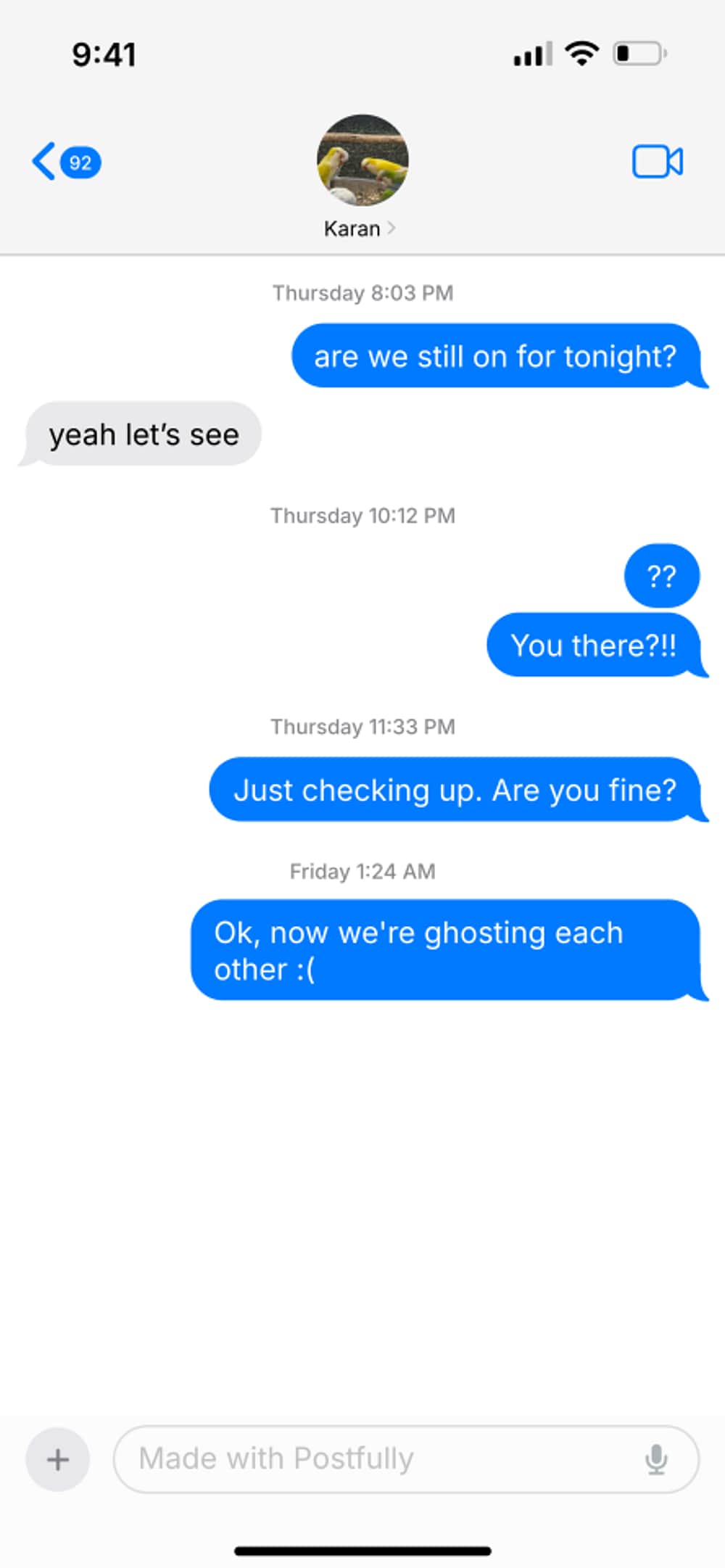
Response time patterns. If someone consistently takes 12+ hours to reply but they're visibly active on social media, they're making a choice. That choice says something.
Questions that go nowhere. You ask something personal and they give a short answer and don't ask you anything back. Once is nothing. Twenty times is a pattern.
Warmth without investment. Some people are genuinely warm, kind, and fun to talk to - but they're not interested. These conversations feel good but don't go anywhere. The warmth is real; the romantic interest isn't.
Escalation vs. flatness. Healthy connections tend to deepen over time - conversations get more personal, plans start forming, the relationship progresses. If everything is exactly the same as it was three months ago, ask yourself why.
How AI Can Read What You Can't
This is exactly what slap.trymbkm.com is built for. You upload your conversation screenshots - whether it's from a dating app, iMessage, WhatsApp, or anywhere else - and the AI gives you a comprehensive, emotion-free analysis of the actual dynamic in your conversation.
No assumptions. No hoping for the best. Just a real look at what's in the texts: who's more engaged, where the conversation is headed, what the signals suggest, and whether there are any patterns you might be overlooking.
The report covers things like engagement balance, conversation momentum, emotional tone analysis, initiative tracking, and an overall read on where things appear to stand. It's the equivalent of having a level-headed friend read through the whole thing and give you their unfiltered take - without the awkwardness of actually asking someone to do that.
People use it for all kinds of situations: the situationship they can't figure out, the dating app match that seems promising but unclear, the long-distance relationship they're not sure is still working, the ex who keeps circling back. Any time you're genuinely confused about what a conversation is telling you, the tool can give you clarity.
One Last Thing
Reading your texts over and over without a clear method isn't analysis - it's anxiety. If you find yourself in that loop, step back and try the structured approach above. Or skip straight to uploading at slap.trymbkm.com and let the AI do the work.
Because the answer you're looking for is probably already in the conversation. You just need the right lens to see it.